
By The Fresh Toast's Brendan Bures, provided exclusively to Benzinga Cannabis.
Marijuana could regulate the main gateway COVID-19 enters host cells in patients, new research concludes.
New research into preventive measure and possible treatment to the novel coronavirus has yielded an unlikely candidate — cannabis. At the pandemic’s start, public health officials warned inhalation of combustible marijuana could make individuals more susceptible to contracting the coronavirus and worsen illness symptoms. This hypothesis came from preliminary data out of China and Italy where underlying lung disease correlated with more hospitalized COVID-19 patients.
A new study published in the journal Preprints, which is not peer-reviewed, finds certain marijuana strains could prevent the spread and severity of COVID-19. It’s all tied to how the coronavirus is transmitted between patients. Like most respiratory illnesses, tiny droplets carrying the disease expelled by coughing or sneezing go airborne. Once a non-infected patient inhales those droplets, it typically enters your body through cells in your lungs and corresponding tissue.
The scientific community has recently identified the ACE2 protein as the primary gateway the coronavirus infects patients. Researchers suspect modulating the level of proteins present in a patients could prevent susceptibility to the disease. In a study completed before the pandemic, researchers had observed the combination of THC and CBD cannabinoids could lower gene expressions that produce and regulate ACE2 proteins.
This made researchers from the University of Lethbridge in Alberta, Canada curious. After all, it could mean cannabis might help prevent the coronavirus from infecting patients. The scientists corroborated the findings, though they were using cannabis oils on human cultures that contained ACE2 proteins.
RELATED: This Telemedicine Start-Up Believes Virtual Health Care Is Here To Stay
Novel combinations of cannabinoids “may become a useful addition to the treatment of COVID-19,” the researchers wrote. “They may also be used to develop additional easy-to-use preventative strategies such as mouth wash and throat gargle products that may be tested for their potential to decrease viral entry via the oral cavity and may be used both in clinical practice and at-home treatment.”
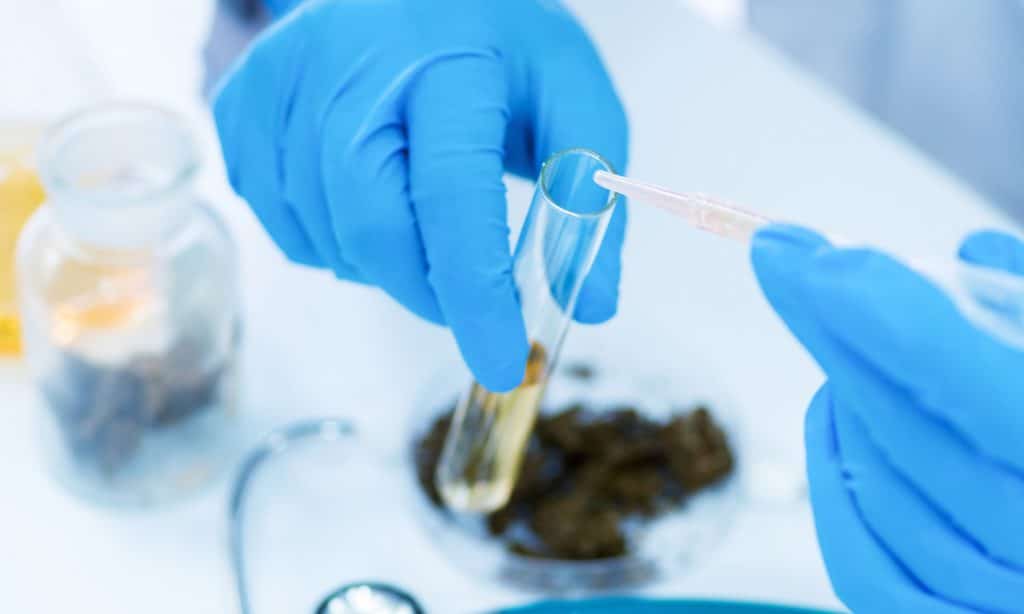
Photo by boonchai wedmakawand/Getty Images
According to the researchers, the most effective marijuana profiles to decrease ACE2 production were a 1:21 THC-to-CBD ratio oil and a 1:3 ratio oil. These disparate ratios caused scientists to conclude other cannabis properties could be playing a role in regulating reduced ACE2 activity. Israeli researchers recently identified cannabis terpenes as possible antiviral agents and have begun testing their effectiveness against the coronavirus.
RELATED: How CBD Can Help You Cope With Social Distancing Guidelines
“While our most efficacious extracts require further validation in a large-scale analysis and an animal model, our study is crucial for the future analysis of the effects of medical cannabis on COVID-19,” concluded the researchers. “Given the current dire and rapidly developing epidemiological situation, every possible therapeutic opportunity and avenue needs to be considered.”
Photo by Radoslav Zilinsky/Getty Images
© 2026 Benzinga.com. Benzinga does not provide investment advice. All rights reserved.
To add Benzinga News as your preferred source on Google, click here.


